
Macular Degeneration
Dry Age-Related Macular Degeneration Treatment in West Georgia

What Is Dry Age-Related Macular Degeneration?
Dry age-related macular degeneration, also called dry AMD or atrophic macular degeneration, is the most common form of the disease. It affects the macula, the central portion of the retina responsible for the sharp, detailed vision used for activities such as reading, driving, and recognizing faces.
Dry AMD typically develops gradually. As the light-sensitive cells within the macula begin to deteriorate, central vision can become less clear over time. The condition does not usually affect peripheral (side) vision in the same way, but changes to central vision can make everyday activities more challenging.
Because dry macular degeneration can progress without noticeable symptoms at first, regular comprehensive eye exams are important, particularly as you get older. Georgia Vision Institute provides evaluation and ongoing eye care for patients throughout West Georgia who are experiencing vision changes or may be at risk for macular degeneration.
Symptoms of Dry Macular Degeneration
Changes caused by dry AMD may develop slowly, which can make them easy to overlook at first. Symptoms can vary depending on how advanced the condition has become.
Possible signs include:
- Blurry or fuzzy central vision
- Difficulty recognizing faces
- Trouble seeing fine details clearly
- Straight lines appearing wavy or distorted
- A dark or empty area in the center of your vision
- Increasing difficulty with activities that depend on clear central vision
If you begin noticing new or worsening changes in your central vision, scheduling an eye examination can help determine the cause.
Who Is at Risk for Dry AMD?
Age is an important risk factor for macular degeneration, and the condition primarily affects adults over age 50. Other factors associated with macular degeneration include smoking, high blood pressure, genetics, poor nutrition, a diet high in saturated fat, UV light exposure, and a lack of regular exercise.
Having one or more risk factors does not necessarily mean you will develop dry AMD. However, understanding your risk can help you and your eye doctor determine how closely your eye health should be monitored.
How Is Dry Macular Degeneration Diagnosed?
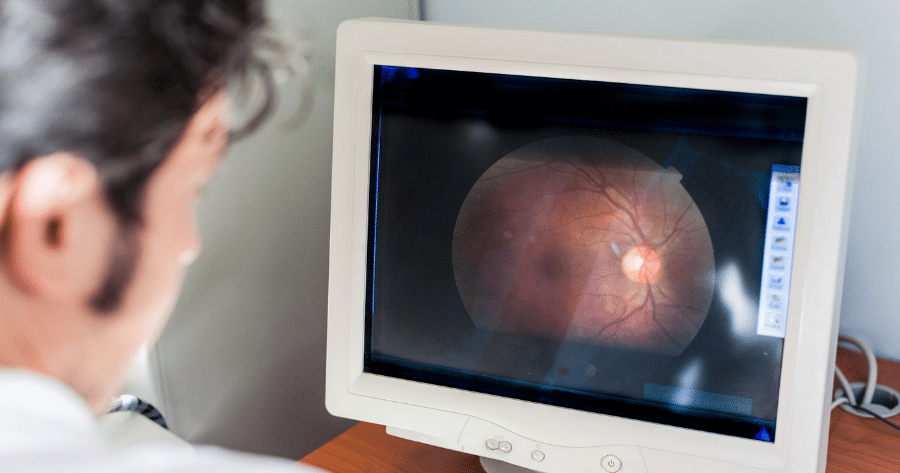
Dry AMD can be identified during a comprehensive eye examination. Your eye doctor may dilate your pupils to examine the retina and macula more closely.
Additional testing may include retinal imaging or optical coherence tomography, commonly called OCT. These tools provide detailed images of the retina and can help your eye specialist identify and monitor changes in the macula.
Regular testing is especially helpful because comparing results over time allows your eye doctor to look for changes that may not yet be noticeable in your daily vision.
Managing Dry Macular Degeneration in West Georgia
There is currently no cure for macular degeneration, but ongoing eye care can help monitor the condition and identify changes as they occur.
Healthy lifestyle habits may also play a role in managing dry AMD. Georgia Vision Institute’s macular degeneration guidance recommends maintaining a healthy diet, exercising regularly, and avoiding smoking.
Your eye doctor can recommend a monitoring schedule based on the stage of your condition, your vision, and your individual risk factors. Staying consistent with follow-up appointments is important because dry AMD can change over time.
Dry Age-Related Macular Degeneration FAQs
Is dry AMD the same as macular degeneration?
Dry AMD is one of the two main forms of age-related macular degeneration. The other form is wet, or neovascular, macular degeneration. Dry AMD is more common and generally progresses more gradually than wet AMD.
What is the difference between dry and wet macular degeneration?
Dry macular degeneration involves gradual deterioration of the light-sensitive cells within the macula. Wet macular degeneration involves abnormal blood vessels growing beneath the retina. These vessels can leak fluid or blood and may cause vision changes more rapidly.
Can dry macular degeneration affect both eyes?
Macular degeneration can affect one or both eyes. The severity and progression may not be identical in each eye, which is one reason regular examinations are important for monitoring changes in your vision.
Does dry macular degeneration cause total blindness?
Macular degeneration primarily affects central vision. Although advanced disease can significantly interfere with activities that require detailed central vision, it does not typically eliminate all vision.
How quickly does dry AMD progress?
Dry age-related macular degeneration usually progresses gradually, but the rate of change can vary from person to person. Regular eye examinations allow your eye doctor to monitor your retina and determine whether the condition is changing.
How is dry AMD monitored?
Monitoring may involve comprehensive dilated eye exams, retinal imaging, and OCT testing. Your eye doctor may compare results from different visits to look for changes in the macula and determine whether your follow-up schedule should be adjusted.
Can lifestyle changes help with dry macular degeneration?
Healthy habits may support overall eye health. Avoiding smoking, eating a nutritious diet, exercising regularly, and managing your general health are among the lifestyle measures that may be discussed as part of dry AMD care.
When should I see an eye doctor for changes in my vision?
Schedule an eye exam if you notice new blurriness, distortion, difficulty recognizing faces, or a dark or empty area in your central vision. New or sudden vision changes should be evaluated promptly.
Schedule a Macular Degeneration Evaluation at Georgia Vision Institute
If you are experiencing changes in your central vision or have concerns about dry age-related macular degeneration, Georgia Vision Institute can evaluate your eye health and help you understand what comes next.
Schedule an appointment at one of our convenient West Georgia locations for comprehensive macular degeneration care and ongoing monitoring.